

Table of Contents
ToggleThe Galapagos Islands are among the most fascinating destinations on Earth, attracting scientists, wildlife enthusiasts, photographers, and travelers from around the world. Famous for their unique biodiversity and their role in shaping Charles Darwin’s theory of evolution, these islands hold a special place in both scientific history and modern conservation efforts. One of the most common questions asked by travelers and students alike is about the location Galapagos and why this remote archipelago has become so globally significant.
Understanding the location of the Galapagos Islands helps explain their extraordinary ecosystem. Their isolation in the Pacific Ocean allowed plants and animals to evolve independently for millions of years, creating species found nowhere else on Earth. Today, the islands remain one of the world’s most important natural laboratories and continue to inspire researchers and visitors alike.
Where Are the Galapagos Islands Located?
The Galapagos Islands are located in the eastern Pacific Ocean approximately 600 miles (about 1,000 kilometers) west of mainland Ecuador in South America. Although separated from the continent by a vast stretch of ocean, the islands belong politically and administratively to Ecuador. The archipelago consists of 13 major islands, 6 smaller islands, and numerous islets and rock formations spread across a large marine area.
The islands sit near the equator, meaning they experience relatively stable temperatures throughout the year. Their unique location at the meeting point of several ocean currents contributes significantly to the rich marine life and diverse ecosystems found throughout the region. This strategic position allows both tropical and temperate species to thrive in the surrounding waters, making the Galapagos one of the most biologically diverse locations on the planet.
The Geographic Importance of the Galapagos Location
The location of the Galapagos Islands is one of the primary reasons for their ecological significance. Situated far from major land masses, the islands developed in isolation for millions of years. This separation created ideal conditions for evolution, allowing species to adapt uniquely to local environments without interference from mainland competitors.
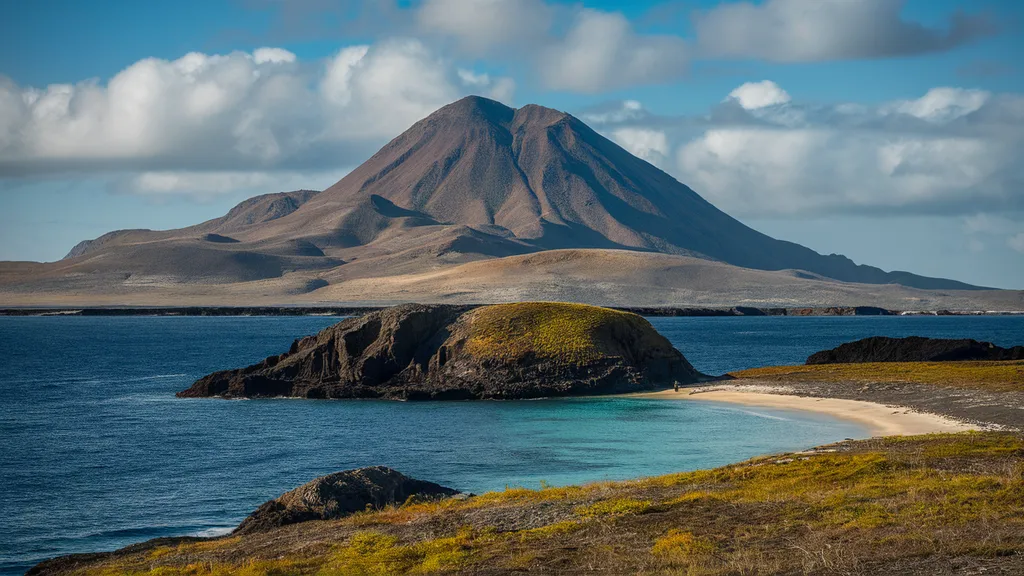
The islands were formed by volcanic activity resulting from a geological hotspot beneath the Earth’s crust. As tectonic plates moved over this hotspot, new islands emerged over time. Even today, some islands remain volcanically active, demonstrating that the geological story of the Galapagos continues to evolve. This combination of volcanic origins and geographic isolation has produced landscapes that range from barren lava fields to lush highland forests.
The Relationship Between Location and Wildlife
One of the most remarkable aspects of the Galapagos Islands is how their location directly influenced the evolution of their wildlife. Because the islands are isolated from continental ecosystems, species arriving there had to adapt to unique environmental conditions. Over generations, these adaptations resulted in entirely new species.
The famous Galapagos giant tortoise, marine iguana, flightless cormorant, and Darwin’s finches are all examples of animals that evolved specifically in response to the islands’ environment. Many species exhibit characteristics not found anywhere else in the world. Scientists continue to study these animals because they provide valuable insights into natural selection, adaptation, and biodiversity.
The surrounding waters are equally impressive. Sea lions, penguins, sharks, manta rays, dolphins, and sea turtles inhabit the marine reserve that surrounds the islands. The convergence of ocean currents brings nutrient-rich waters that support abundant marine life and create one of the world’s most productive ecosystems.
Climate and Weather in the Galapagos Islands
Despite their equatorial location, the Galapagos Islands do not experience extreme tropical heat throughout the year. Several ocean currents influence local temperatures and weather patterns, creating distinct seasons and ecological zones.
The warm season generally occurs between December and May, bringing higher temperatures, calmer seas, and occasional rainfall. During this period, vegetation becomes greener and many animal species enter breeding seasons.
The cooler season, which typically lasts from June to November, is influenced by the Humboldt Current. This current lowers temperatures and often creates misty conditions known locally as “garúa.” The cooler waters attract large numbers of marine animals and provide excellent opportunities for wildlife observation.
The islands’ varied elevations further contribute to climate diversity. Coastal regions tend to be dry and arid, while higher elevations often receive more moisture and support greener vegetation.
Why the Galapagos Islands Are World Famous
The global fame of the Galapagos Islands is closely linked to Charles Darwin’s visit aboard the HMS Beagle in 1835. Observations made during his time on the islands helped inspire his theory of evolution by natural selection. Darwin noticed differences among species from island to island, leading him to question traditional ideas about the origin of life and species development.
Today, the islands continue to serve as a living laboratory for scientific research. Conservation organizations and governments work together to protect the delicate ecosystems from threats such as invasive species, pollution, and climate change. The Galapagos Islands were among the first locations designated as a UNESCO World Heritage Site, reflecting their exceptional universal value.
Beyond their scientific significance, the islands attract thousands of tourists each year who come to experience unique wildlife encounters, pristine landscapes, snorkeling adventures, and unforgettable natural beauty.
Traveling to the Galapagos Islands
Most visitors reach the Galapagos Islands through Ecuador. Flights typically depart from Quito or Guayaquil and arrive at airports located on Baltra Island or San Cristóbal Island. Once in the archipelago, travelers can explore the islands through guided cruises, island-hopping tours, or organized excursions.
Strict environmental regulations help preserve the fragile ecosystems. Visitors are encouraged to follow conservation guidelines, remain on designated paths, and maintain respectful distances from wildlife. These measures ensure that future generations can continue enjoying the remarkable natural heritage of the Galapagos.
Tourism in the region emphasizes sustainability, with many operators focusing on responsible travel practices that minimize environmental impact while supporting local communities.
The Future of the Galapagos Islands
The future of the Galapagos depends heavily on conservation and sustainable management. As tourism increases and environmental challenges grow, maintaining ecological balance becomes increasingly important. Scientists, conservation groups, government agencies, and local residents collaborate to protect the islands’ unique biodiversity.
Research programs continue to monitor wildlife populations, restore habitats, and address threats posed by invasive species. Public awareness and responsible tourism play vital roles in preserving one of the world’s most extraordinary natural treasures.
The location of the Galapagos Islands, once responsible for their isolation and evolutionary uniqueness, now serves as a reminder of the importance of protecting fragile ecosystems in an interconnected world.
Conclusion
The location Galapagos is far more than a simple geographic fact. Situated approximately 600 miles west of Ecuador in the Pacific Ocean, the Galapagos Islands occupy one of the most biologically significant locations on Earth. Their isolation, volcanic origins, and unique environmental conditions have created a remarkable natural laboratory filled with extraordinary wildlife and breathtaking landscapes. From inspiring Charles Darwin’s theory of evolution to serving as a global conservation symbol, the Galapagos Islands continue to capture the imagination of scientists and travelers alike. Understanding their location provides valuable insight into why this archipelago remains one of the world’s most treasured natural wonders.
Frequently Asked Questions (FAQ)
1. Where are the Galapagos Islands located?
The Galapagos Islands are located in the Pacific Ocean about 600 miles (1,000 kilometers) west of Ecuador’s mainland.
2. Which country owns the Galapagos Islands?
The islands are part of Ecuador and are administered as one of its provinces.
3. Why are the Galapagos Islands famous?
They are famous for their unique wildlife, biodiversity, and their role in inspiring Charles Darwin’s theory of evolution.
4. How many islands are in the Galapagos archipelago?
The archipelago consists of 13 major islands, 6 smaller islands, and numerous islets and rock formations.
5. What is the best time to visit the Galapagos Islands?
The islands can be visited year-round, but December to May offers warmer weather, while June to November provides excellent wildlife viewing opportunities.
6. Are the Galapagos Islands a UNESCO World Heritage Site?
Yes, the Galapagos Islands were designated as a UNESCO World Heritage Site due to their outstanding natural importance.
7. Can tourists visit all the Galapagos Islands?
No. Access to some areas is restricted to protect wildlife and ecosystems, and many locations require guided visits.
8. What animals are unique to the Galapagos Islands?
Notable endemic species include the Galapagos giant tortoise, marine iguana, Darwin’s finches, and the flightless cormorant.